



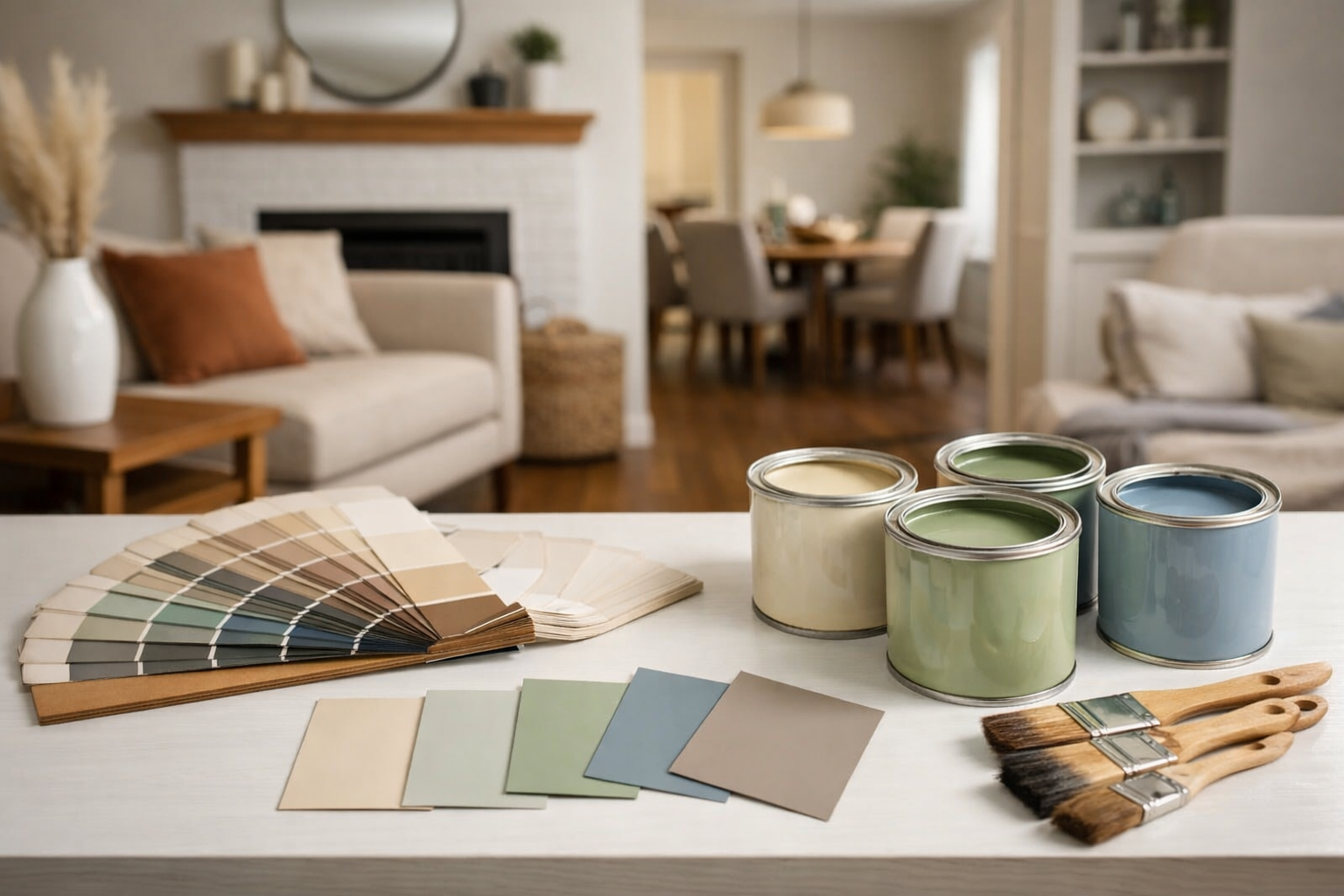
Choosing the perfect color palette for your home can feel overwhelming. With endless paint shades, trending color schemes, and personal preferences to balance, it’s easy to second-guess every decision. But when done right, your home’s color palette can transform how a space looks, feels, and even functions.
This guide will walk you through choosing the perfect color palette for your home, helping you create a cohesive, timeless, and personalized interior you’ll love for years.
Why Your Home’s Color Palette Matters
Color is more than decoration—it sets the mood of your entire home. The right palette can:
- Make small rooms feel larger and brighter.
- Create warmth and comfort.
- Improve flow between rooms.
- Reflect your personality and lifestyle.
A poorly chosen palette, on the other hand, can make spaces feel disconnected or uncomfortable.
Step 1: Start With Your Home’s Existing Elements
Before picking any paint colors, look at what’s already in your home. These elements are often permanent or expensive to change:
- Flooring (wood, tile, carpet)
- Countertops and cabinetry
- Large furniture pieces
- Architectural details (fireplaces, beams, trim)
Your color palette should complement these features rather than compete with them. For example, warm wood floors pair beautifully with earthy tones, while cooler stone surfaces work best with crisp neutrals or muted blues.
Step 2: Understand Color Psychology
Color affects mood more than most people realize. When choosing a color palette for your home, think about how each room should feel.
- Whites & Neutrals: Clean, airy, timeless
- Blues: Calm, relaxing, ideal for bedrooms and bathrooms
- Greens: Balanced, natural, great for living areas
- Yellows: Cheerful and energizing (best in moderation)
- Reds & Oranges: Bold, warm, and stimulating
- Grays: Sophisticated, modern, versatile
Matching color psychology to each space’s function helps create a home that feels intuitive and comfortable.
Step 3: Choose a Base Color You Love
Your base color is the foundation of your entire palette. It’s typically a neutral shade used across walls, hallways, or open spaces to create consistency.
Popular base colors include:
- Warm whites
- Soft beiges
- Light greige (a mix of gray and beige)
- Muted taupe
A strong base color allows accent colors to shine without overwhelming the space.
Step 4: Apply the 60-30-10 Rule
One of the easiest ways to create balance is by following the 60-30-10 color rule:
- 60% – Dominant color (walls, large surfaces)
- 30% – Secondary color (furniture, rugs, curtains)
- 10% – Accent color (pillows, artwork, décor)
This approach ensures visual harmony while giving you room to add personality through accents.
Step 5: Consider Natural and Artificial Lighting
Lighting can dramatically change how colors appear.
- North-facing rooms tend to look cooler.
- South-facing rooms receive warm, bright light.
- Artificial lighting (warm vs. cool bulbs) affects undertones.
Always test paint samples on your walls and observe them at different times of day before committing.
Step 6: Create Flow Between Rooms
A common mistake homeowners make is choosing colors room by room without considering the bigger picture. For a cohesive look:
- Stick to a consistent undertone (warm or cool)
- Use variations of the same color family.
- Repeat accent colors throughout the home.
This is especially important for open-concept spaces, where color transitions should feel natural.
Step 7: Draw Inspiration From Nature and Personal Style
Some of the most timeless color palettes come from nature—sand, stone, sky, forests, and oceans. You can also pull inspiration from:
- Artwork
- Travel memories
- Fashion
- Favorite furniture pieces
Your home should feel like you, not just a trend.
Step 8: Avoid Over-Trendy Choices
Trendy colors can be fun, but they often date a space quickly. If you love bold or chic shades, use them as accents rather than dominant colors. This makes future updates easier and more affordable.
Common Color Palette Mistakes to Avoid
- Choosing paint before furniture
- Ignoring undertones
- Using too many bold colors
- Skipping test samples
- Forgetting about lighting conditions
Avoiding these pitfalls can save you time, money, and frustration.
Final Thoughts: Trust the Process
Learning how to choose the perfect color palette for your home doesn’t require a design degree—just thoughtful planning and patience. Start with what you have, understand how colors affect mood, and build a palette that flows naturally from room to room.
When you choose colors intentionally, your home becomes more than a place to live—it becomes a space that truly feels like home.