



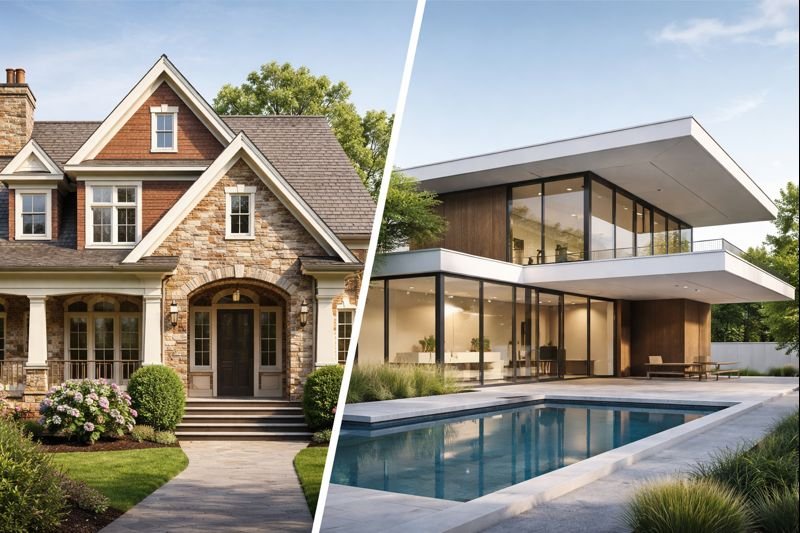
Architecture is more than the art of designing buildings—it reflects how people live, what they value, and how they respond to their environment. Among the many architectural styles that exist today, traditional and modern architecture stand out as two of the most widely discussed and contrasted approaches.
While traditional architecture draws inspiration from history, culture, and craftsmanship, modern architecture embraces innovation, minimalism, and new technologies. Homeowners, designers, and fans can make better decisions if they are aware of the distinctions between these two styles.
In this guide, we’ll break down traditional vs modern architecture, explore their defining features, and explain how each style shapes the spaces we live in.
What Is Traditional Architecture?
Traditional architecture refers to building styles that are deeply rooted in historical practices and regional influences. These designs evolved over centuries, shaped by climate, available materials, cultural values, and craftsmanship.
Rather than following a single global standard, traditional architecture varies widely—from colonial homes and Victorian buildings to vernacular houses unique to specific regions.
Key Characteristics of Traditional Architecture
- Ornate details and craftsmanship
- Symmetrical layouts
- Pitched roofs and decorative facades
- Natural materials like wood, brick, and stone
- Warm, rich color palettes
Traditional architecture often emphasizes comfort, familiarity, and a sense of permanence. Buildings are designed to feel welcoming and timeless rather than experimental.
Modern Architecture: What Is It?
Modern architecture emerged in the early 20th century as a response to industrialization and changing lifestyles. It prioritizes function, simplicity, and innovation over ornamentation.
Modern design challenges traditional norms by stripping away excess decoration and focusing on clean lines, open spaces, and the efficient use of materials.
Key Characteristics of Modern Architecture
- Minimalist design
- Flat or low-pitched roofs
- Open floor plans
- Large windows and natural light
- Glass, concrete, steel, and other industrial materials
Modern architecture is often associated with progress, efficiency, and adaptability—reflecting the fast-paced, technology-driven world we live in today.
Traditional vs Modern Architecture: Key Differences Explained
Let’s explore how these two architectural styles differ across essential aspects of design and functionality.
1. Design Philosophy
Traditional architecture focuses on preserving heritage and aesthetic continuity. It respects time-tested forms and decorative elements passed down through generations.
Modern architecture, on the other hand, is driven by innovation. It challenges conventions and prioritizes function, simplicity, and forward-thinking design.
2. Use of Materials
Traditional buildings rely heavily on locally sourced, natural materials, which often add texture and warmth to structures.
Modern architecture embraces industrial and engineered materials, allowing for bold structural forms, larger spans, and sleeker finishes.
3. Layout and Space Planning
Traditional homes typically feature clearly defined rooms, each serving a specific purpose.
Modern architecture favors open layouts, where living, dining, and kitchen spaces flow together, promoting flexibility and interaction.
4. Aesthetic Appeal
Traditional architecture is rich in ornamental detail, including moldings, columns, arches, and decorative trims.
Modern style is purposefully simple, employing geometric shapes, straight lines, and muted hues to provide a serene, tidy look.
5. Relationship with Nature
Traditional architecture often responds to the climate through features such as courtyards, verandas, and thick walls.
Modern architecture emphasizes visual connection with the outdoors, using floor-to-ceiling windows, glass walls, and seamless indoor-outdoor transitions.
6. Technology and Sustainability
Traditional buildings were designed using passive techniques for ventilation and temperature control.
Modern architecture integrates advanced technologies, such as smart systems, energy-efficient materials, and sustainable construction methods.
Pros and Cons of Traditional Architecture
Advantages
- Timeless beauty and character
- Strong cultural and emotional connection
- Durable materials and craftsmanship
Disadvantages
- Higher maintenance costs
- Less flexibility for modern lifestyles
- Limited integration of new technologies
Pros and Cons of Modern Architecture
Advantages
- Clean, efficient layouts
- Better energy efficiency
- Adaptable to contemporary needs
Disadvantages
- Can feel cold or impersonal to some
- Less decorative character
- May age poorly if trends change
Which Architectural Style Is Right for You?
Choosing between traditional and modern architecture depends on several factors:
- Lifestyle preferences
- Location and climate
- Budget and maintenance expectations
- Personal taste
Some homeowners prefer the charm and familiarity of traditional design, while others are drawn to the simplicity and functionality of modern spaces. Interestingly, many contemporary homes now blend both styles—combining conventional elements with modern layouts and materials.
The Rise of Transitional Architecture
The gap between traditional and modern design is filled by transitional architecture. It is becoming increasingly popular among homeowners who want the best of both worlds, as it combines contemporary simplicity with classic proportions.
Final Thoughts
The debate between traditional vs modern architecture isn’t about which style is better—it’s about understanding how each approach shapes our built environment. Traditional architecture connects us to history and culture, while modern architecture reflects innovation and evolving lifestyles.
By recognizing the key differences, you can better appreciate each style and choose designs that align with your values, needs, and vision for the future.