



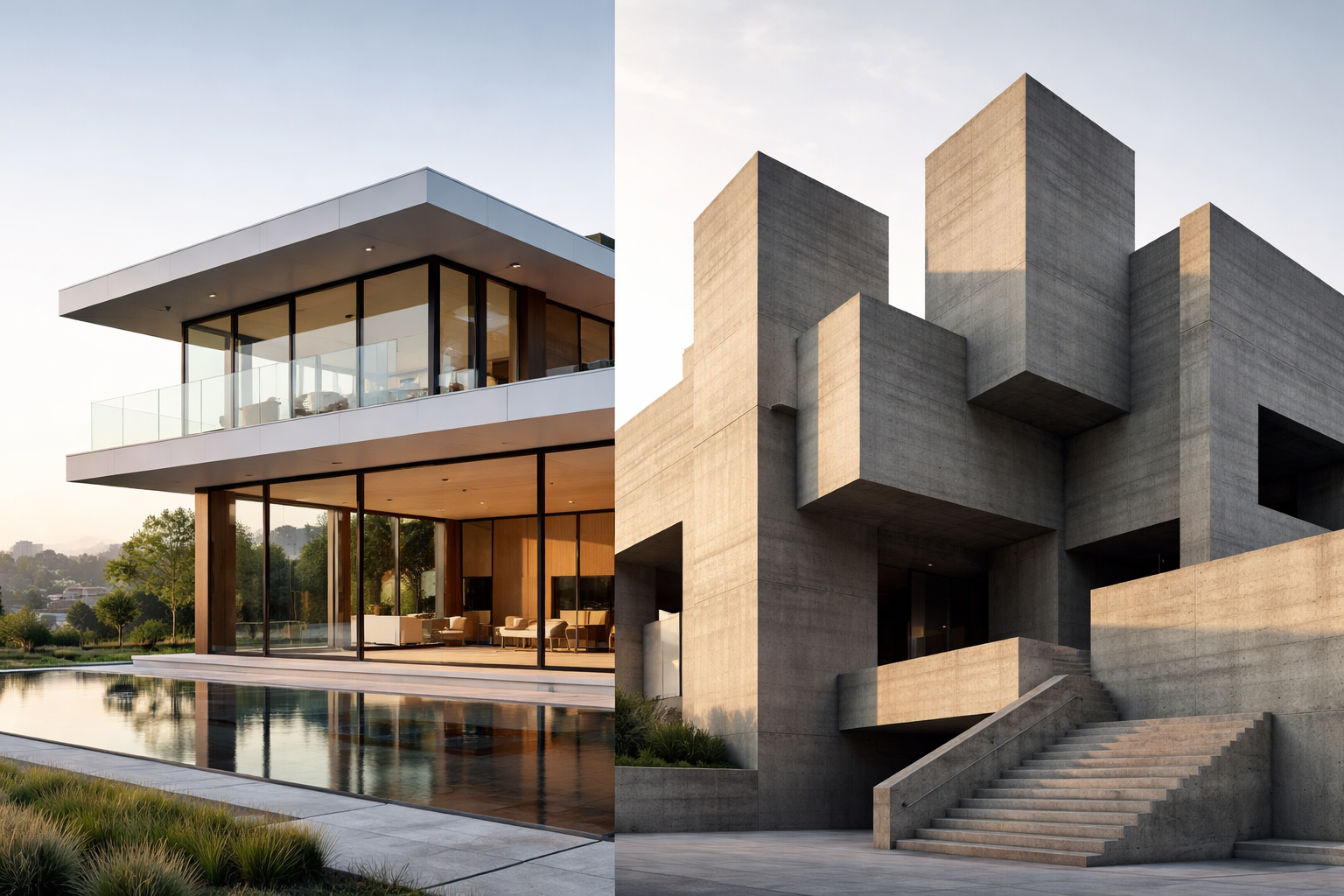
Modern architecture is not a single look or formula—it’s a story of ideas, values, and reactions to how people live, work, and interact with space. From calm, clutter-free homes to bold concrete structures that divide opinion, modern architectural styles reflect changing lifestyles, technologies, and cultural attitudes.
In this guide, we’ll explore the most influential modern architectural styles, understand their origins, what defines them, and why they still shape cities and homes around the world today.
What Defines Modern Architecture?
Modern architecture emerged in the late 19th and early 20th centuries as a response to industrialization and rapid urban growth. Architects began rejecting excessive ornamentation and instead focused on:
- Function over decoration
- Clean lines and open spaces
- New materials like steel, glass, and reinforced concrete
- Designs that reflect modern life, not historical traditions
Rather than copying the past, modern architecture looks forward—embracing simplicity, honesty, and innovation.
1. Minimalist Architecture: Less, But Better
Minimalist architecture is the most widely recognized modern style today. Rooted in the idea that less is more, it strips buildings down to their essential elements.
Key Characteristics
- Simple geometric forms
- Neutral color palettes (white, grey, earth tones)
- Open floor plans
- Natural light as a design feature
- Minimal decoration and furniture
Why It Matters
Minimalism promotes clarity and calm in an increasingly chaotic world. It encourages intentional living, where every space and object serves a purpose. This style is especially popular in urban homes, studios, and modern villas.
2. Scandinavian Architecture: Warm Modernism
Scandinavian architecture combines modern design principles with comfort and human warmth. Originating in Nordic countries, it adapts modernism to cold climates and long winters.
Key Characteristics
- Light-filled interiors
- Natural materials like wood and stone
- Soft colors and textures
- Functional yet cozy layouts
Why It Matters
This style proves that modern architecture doesn’t have to feel cold or sterile. It balances simplicity with livability, making it ideal for residential design.
3. Mid-Century Modern: Timeless Simplicity
Mid-century modern architecture flourished from the 1940s to the 1970s and remains influential today.
Key Characteristics
- Flat or gently sloped roofs
- Large glass windows
- Strong indoor–outdoor connection
- Clean lines with organic shapes
Why It Matters
Mid-century modern design was revolutionary for blending nature with architecture. Its timeless appeal makes it one of the most revived modern styles in contemporary home design.
4. Industrial Architecture: Raw and Honest
Industrial architecture takes inspiration from factories and warehouses, transforming utilitarian spaces into stylish environments.
Key Characteristics
- Exposed brick, steel, and concrete
- Visible pipes and structural elements
- High ceilings and open layouts
- Neutral, muted colors
Why It Matters
This style celebrates imperfection and authenticity. It’s widely used in loft apartments, offices, cafes, and creative spaces.
5. International Style: Global Modernism
The International Style aimed to create architecture that could work anywhere in the world, regardless of culture or location.
Key Characteristics
- Rectangular forms
- Glass curtain walls
- Lack of ornamentation
- Emphasis on volume over mass
Why It Matters
It shaped modern skylines and corporate architecture, influencing countless office buildings and urban developments worldwide.
6. Contemporary Architecture: Constantly Evolving
While often confused with modern architecture, contemporary architecture refers to what’s being built now—and it keeps evolving.
Key Characteristics
- Mixed materials and bold forms
- Sustainable and smart design
- Innovative construction techniques
- Adaptation to local climate and culture
Why It Matters
This style reflects today’s priorities: sustainability, flexibility, and technology. It borrows ideas from multiple architectural movements without being confined to one.
7. Brutalist Architecture: Bold, Raw, and Controversial
Brutalism is one of the most debated modern architectural styles. Originating in the mid-20th century, it emphasizes raw materials and structural honesty.
Key Characteristics
- Exposed concrete surfaces
- Heavy, block-like forms
- Minimal decoration
- Emphasis on function
Why It Matters
Despite criticism, Brutalism represents architectural honesty and social ambition. Many Brutalist buildings were designed for public use—universities, housing, and government institutions—and are now being re-evaluated and preserved.
How Modern Architectural Styles Shape Today’s Cities
Modern architecture influences more than aesthetics—it shapes how people live and interact. Open floor plans encourage social connection, sustainable materials reduce environmental impact, and minimalist design supports mental clarity.
As cities grow denser, modern styles continue to adapt, blending efficiency, sustainability, and beauty.
Choosing the Right Modern Style for Your Space
When selecting a modern architectural style, consider:
- Climate and environment
- Lifestyle and daily habits
- Budget and materials
- Long-term functionality
The best designs don’t blindly follow trends—they respond thoughtfully to human needs.
Final Thoughts
Modern architectural styles—from the quiet elegance of minimalism to the bold presence of Brutalism—represent more than design choices. They reflect society, technology, and our imagination of the future.
Understanding these styles helps homeowners, designers, and enthusiasts make informed decisions and appreciate the built world around them.
Modern architecture isn’t about choosing one style—it’s about finding balance between form, function, and meaning.