



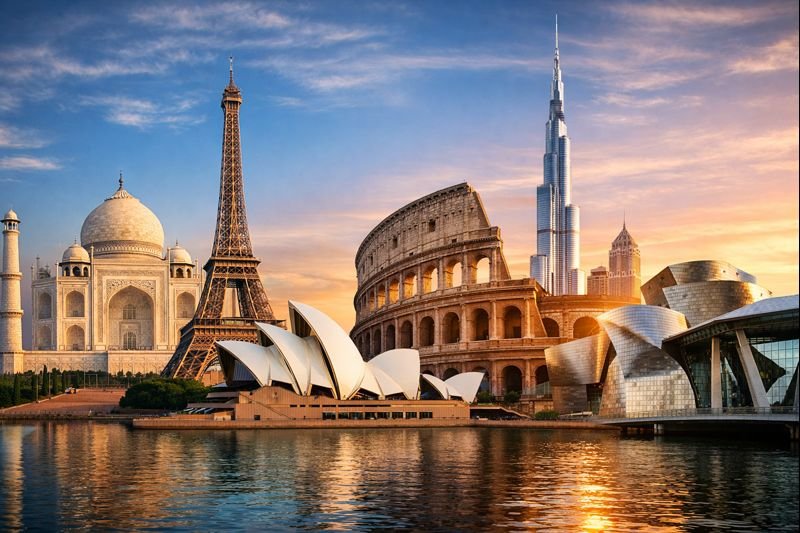
Architecture has always been more than the act of constructing buildings—it is a reflection of human ambition, creativity, and cultural progress. Throughout history, certain structures have pushed boundaries so boldly that they reshaped how architects think, design, and build. These famous architectural marvels didn’t just stand out visually; they redefined design principles and influenced generations of architecture worldwide.
In this article, we explore the most famous architectural marvels that redefined design, examining how each one challenged conventions and changed the future of architecture.
The Taj Mahal (India): Perfect Symmetry and Emotional Architecture
The Taj Mahal is often celebrated for its beauty, but its true architectural brilliance lies in its mastery of symmetry, proportion, and emotional storytelling. This white marble mausoleum, constructed in the 17th century, brought a harmonious balance uncommon at such a scale.
What made the Taj Mahal revolutionary was how architecture was used to evoke emotion. Every element—from the reflective pools to the subtle optical illusions—was carefully designed to create a sense of serenity and perfection. It set a new benchmark for monumental architecture infused with human emotion, influencing Mughal and global design traditions.
The Eiffel Tower (France): Redefining Beauty Through Engineering
When the Eiffel Tower was completed in 1889, it was widely criticized as an eyesore. Yet, it ultimately became one of the most recognizable structures on Earth. What made it revolutionary was its radical use of exposed iron as the primary design element.
At a time when stone and ornamentation dominated architecture, the Eiffel Tower proved that engineering itself could be beautiful. It paved the way for modernist thinking, where structure and function became central to design aesthetics.
Fallingwater (USA): Architecture in Harmony With Nature
Designed by Frank Lloyd Wright, Fallingwater transformed the way architects approached the relationship between buildings and their natural surroundings. Instead of dominating the landscape, the house was designed to exist within it, built directly over a waterfall.
This architectural marvel redefined design by demonstrating that modern architecture could be both bold and environmentally sensitive. It influenced the rise of organic architecture, where buildings respond to their environment rather than resist it.
The Sydney Opera House (Australia): Sculptural Expression in Architecture
The Sydney Opera House changed architecture by blurring the line between building and sculpture. Its sail-like roof forms were unlike anything the world had seen before, pushing the limits of engineering and materials.
More than just a performance venue, it redefined design by proving that public architecture could be expressive, iconic, and emotionally engaging. Today, it stands as a symbol of how bold creativity can redefine a city’s identity.
The Colosseum (Italy): Engineering at an Unprecedented Scale
The Roman Colosseum remains one of the most influential architectural marvels in history. Its revolutionary use of arches, vaults, and concrete allowed for massive structures that were both functional and durable.
What truly redefined design was its systematic approach to crowd management, including entrances, exits, and seating tiers—concepts still used in modern stadiums. The Colosseum laid the foundation for large-scale public architecture worldwide.
Burj Khalifa (UAE): Redefining Vertical Architecture
Standing as the tallest building in the world, the Burj Khalifa redefined what was structurally and architecturally possible in skyscraper design. Its Y-shaped plan wasn’t just aesthetic—it was engineered to resist wind forces at extreme heights.
The Burj Khalifa transformed modern urban skylines and redefined design by proving that height, sustainability, and luxury could coexist in a single structure.
Guggenheim Museum Bilbao (Spain): The Power of Iconic Design
The Guggenheim Museum Bilbao is often credited with changing the economic fate of an entire city. Its flowing titanium curves and unconventional form challenged the idea that museums had to be static or traditional.
This architectural marvel redefined design by showing how bold, iconic buildings could drive cultural and economic transformation, a phenomenon now known as the “Bilbao Effect.”
Why These Architectural Marvels Still Matter Today
These famous architectural marvels that redefined design share a common trait: they challenged the norms of their time. Whether through new materials, innovative engineering, or emotional storytelling, each structure expanded the possibilities of architecture.
Their influence continues today in:
- Sustainable design practices
- Skyscraper engineering
- Cultural and civic architecture
- Human-centered design philosophies
They remind us that architecture is not just about shelter—it’s about vision, innovation, and shaping the future.
Final Thoughts
From ancient wonders to modern skyscrapers, the world’s most famous architectural marvels have done more than impress—they have redefined design itself. By breaking rules and reimagining possibilities, these structures continue to inspire architects, designers, and dreamers across generations.
As architecture evolves alongside technology and sustainability, the next great design revolution may already be taking shape—standing on the shoulders of these timeless marvels.