



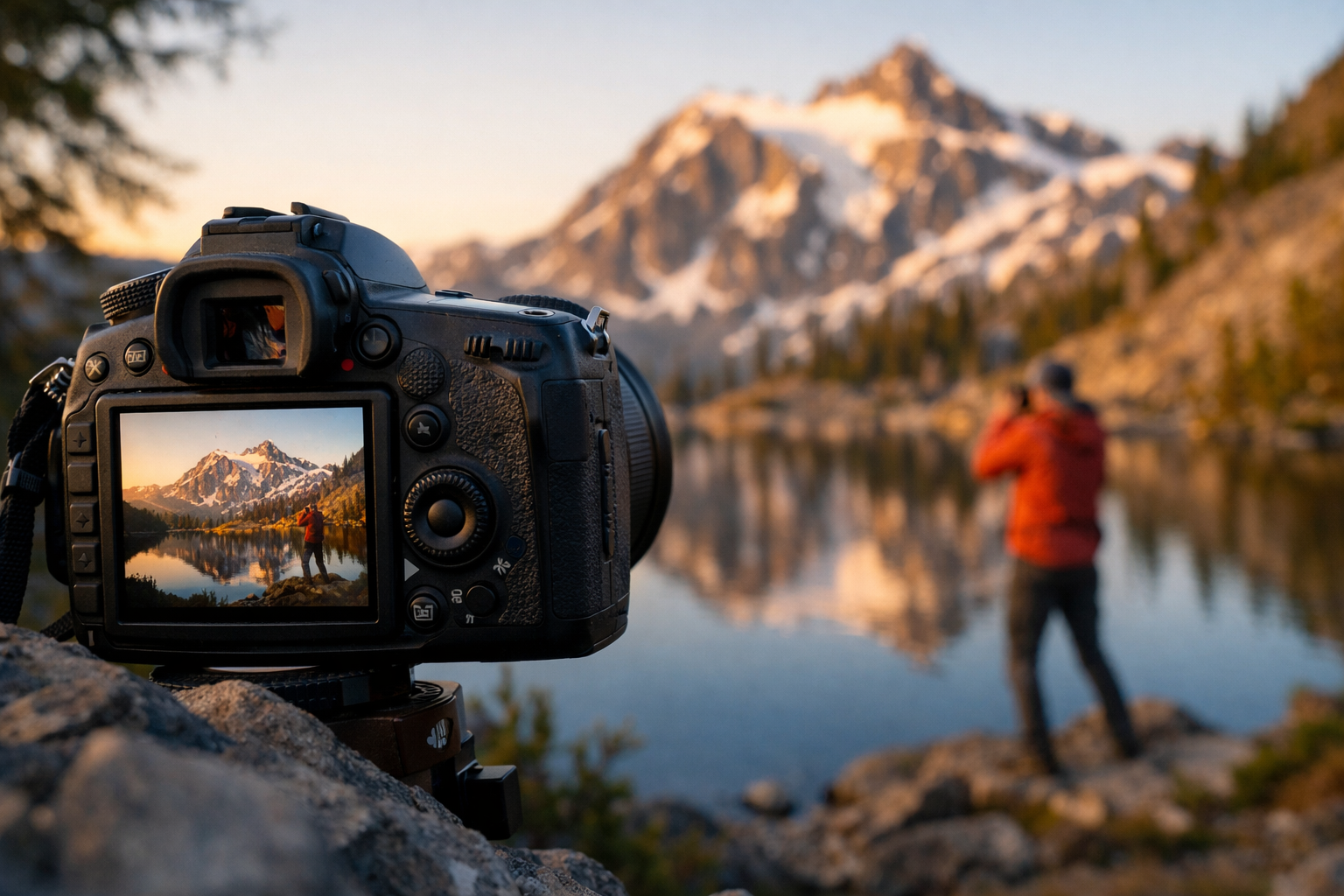
Great photography isn’t just about owning an expensive camera or mastering technical settings. At its core, powerful photography is about composition—how elements are arranged within the frame to tell a story, evoke emotion, or guide the viewer’s eye.
Whether you’re shooting landscapes, portraits, street scenes, or product photos, understanding composition can instantly elevate your images. In this guide, we’ll break down the photography composition rules every photographer should know, explain why they work, and show you how to apply them creatively rather than mechanically.
What Is Composition in Photography?
Composition refers to the intentional placement of visual elements—such as subjects, lines, shapes, light, and space—within a photograph. Strong composition creates balance, directs attention, and makes an image feel complete.
Think of composition as visual storytelling. Every choice you make—where you stand, what you include, what you exclude—affects how your photo is perceived.
1. The Rule of Thirds (And When to Break It)
The rule of thirds is one of the most widely taught photography composition rules—and for good reason.
How it works:
Imagine your frame divided into a 3×3 grid. Place your subject along one of the grid lines or at their intersections rather than dead center.
Why it works:
- Creates visual balance
- Makes images feel more dynamic
- Feels natural to the human eye
Pro tip:
Use the rule of thirds as a starting point, not a restriction. Centered compositions can be incredibly powerful for symmetry, portraits, and minimalistic shots.
2. Leading Lines: Guide the Viewer’s Eye
Leading lines are lines within a photo that draw attention toward the main subject or through the scene.
Common examples:
- Roads
- Railings
- Rivers
- Fences
- Shadows
- Architectural lines
Why they work:
Leading lines create depth and movement, pulling viewers into the photograph rather than letting their eyes wander out of the frame.
3. Framing Your Subject Naturally
Framing uses elements within the scene to surround or highlight your subject.
Examples of natural frames:
- Doorways
- Windows
- Trees
- Arches
- Branches
- Shadows
Benefits:
- Adds depth
- Focuses attention
- Creates context without clutter
Natural framing works exceptionally well in travel and street photography.
4. Symmetry and Patterns
Humans are naturally drawn to symmetry and repetition.
Where symmetry shines:
- Architecture
- Reflections
- Portraits
- Minimalist photography
How to use it:
- Center your subject
- Keep horizons perfectly level.
- Embrace reflections for visual impact.
Breaking symmetry intentionally—by adding a single contrasting element—can also make an image more compelling.
5. Fill the Frame for Strong Impact
If your subject is interesting, don’t be afraid to get close.
Why filling the frame works:
- Eliminates distractions
- Emphasizes details and textures
- Creates emotional intensity
This rule is especially powerful in portrait, wildlife, and macro photography.
6. Use Negative Space to Let Photos Breathe
Negative space refers to empty or uncluttered areas surrounding your subject.
Why it matters:
- Creates calm and simplicity
- Highlights the subject
- Adds elegance and mood
A small subject surrounded by negative space can feel lonely, peaceful, dramatic, or powerful—depending on the context.
7. Depth: Foreground, Middle Ground, Background
Flat photos often fail to engage. Depth transforms a 2D image into something immersive.
How to create depth:
- Include foreground elements
- Use wide apertures selectively.
- Layer your scene intentionally.
Landscape photographers rely heavily on this technique to create a sense of scale.
8. Perspective Changes Everything
One of the most overlooked photography composition rules is changing perspective.
Instead of shooting from eye level:
- Get low
- Shoot from above
- Move closer
- Step farther back
A simple change in perspective can turn an ordinary scene into a unique photograph.
9. Balance Visual Weight
Every element in a photo has visual weight—size, brightness, color, or contrast.
Balanced photos feel:
- Intentional
- Stable
- Easy to view
You can balance a large subject on one side with a smaller but brighter element on the other.
10. Simplify the Scene
Strong composition often comes from what you leave out, not what you include.
Ask yourself:
- Does this element support the story?
- Is it distracting?
- Can I move or reframe?
Minimalist composition often yields more professional-looking images.
11. Use Color and Contrast Strategically
Color contrast can act as a compositional tool just as powerful as lines or shapes.
Examples:
- Warm subject against a cool background
- Bright colors against neutral tones
- Light subjects on dark backgrounds
Intentional color use can instantly guide attention.
12. Visual Flow and Eye Movement
Great photos don’t just stop the viewer—they guide them.
Use:
- Curves
- Repetition
- Gestures
- Directional light
The goal is to lead the eye through the image naturally.
13. Break the Rules (On Purpose)
Every photography composition rule exists because it usually works—not because it must always be followed.
Once you understand these principles:
- Break them intentionally
- Experiment freely
- Develop your own visual style.
The best photographers know the rules well enough to bend them creatively.
Common Composition Mistakes to Avoid
- Cluttered backgrounds
- Cropping limbs awkwardly
- Centering everything automatically
- Ignoring the edges of the frame
- Overcomplicating simple scenes
Awareness alone can fix most of these issues instantly.
How to Practice Composition Effectively
- Study photos you admire (and ask why they work)
- Shoot with one rule in mind per session.
- Review images critically
- Re-shoot the same subject from different angles.
Composition improves faster through intentional practice than gear upgrades ever will.
Final Thoughts
Mastering composition is one of the fastest ways to improve your photography—regardless of camera, genre, or experience level. These photography composition rules every photographer should know are not creative limitations but powerful tools for communicating visually.
Learn them. Practice them. Then make them your own.
Great photography isn’t about perfection—it’s about intention.