



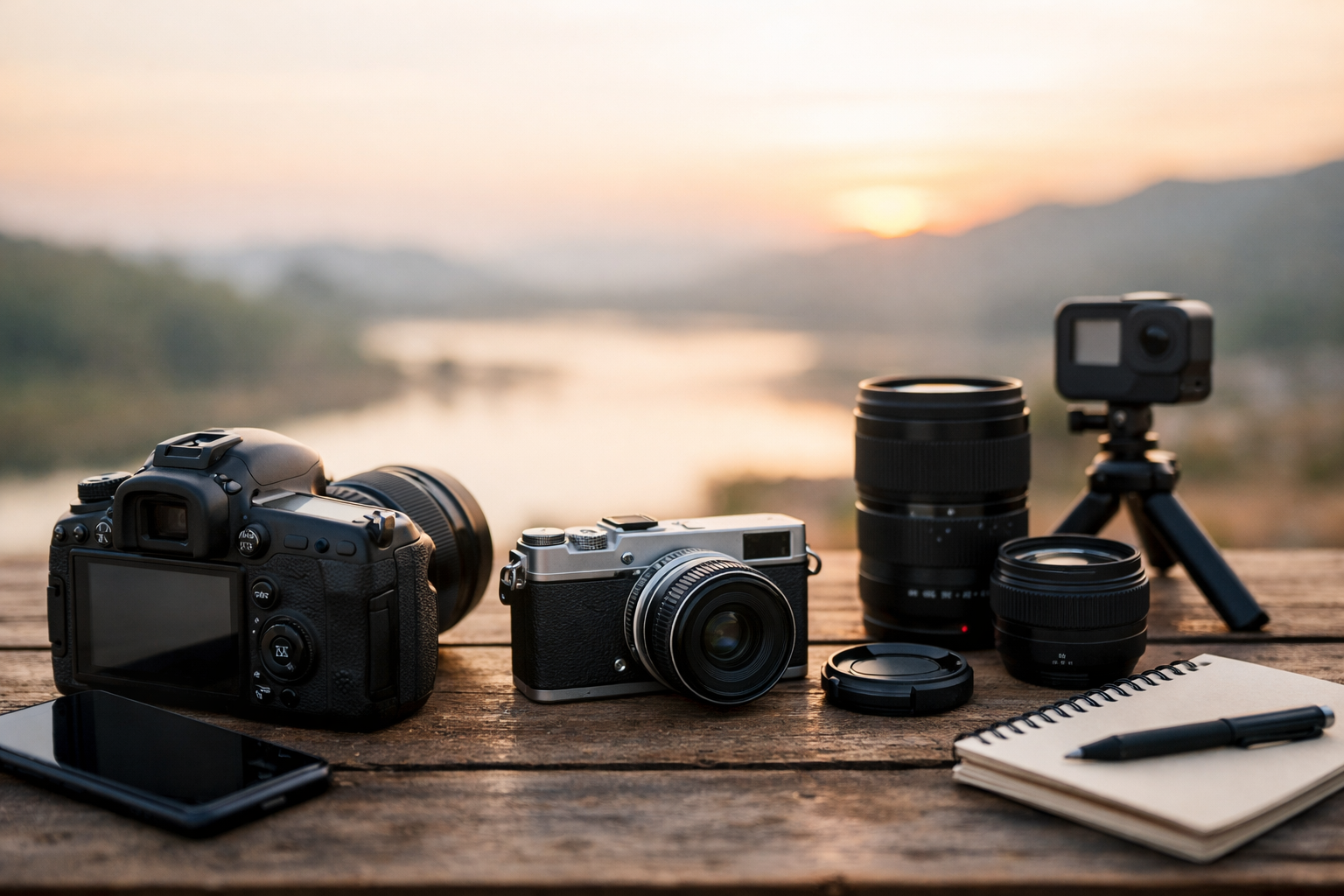
You don’t need a $5,000 camera or years of formal training to take professional-looking photos. In fact, some of the most compelling images today are captured on smartphones, entry-level DSLRs, and compact mirrorless cameras.
What separates amateur photos from professional ones isn’t the camera—it’s how you use light, composition, timing, and intent.
This guide will walk you through how to take professional photos with any camera, whether you’re using a phone, a point-and-shoot, or a full-frame setup.
What “Professional Photos” Really Mean
Before diving into techniques, it helps to redefine “professional.”
Professional photos are:
- Clear and intentional
- Well-lit (or creatively under-lit)
- Thoughtfully composed
- Edited with restraint
- Emotionally engaging or purposeful
Megapixels, brand names, or expensive lenses do not define them.
Once you understand that, everything else becomes simpler.
Master Light First (Because Light Is Photography)
Use Natural Light Whenever Possible
Natural light is forgiving, free, and incredibly flattering when used correctly.
Best times to shoot:
- Early morning
- Late afternoon (golden hour)
- Overcast days (soft, even lighting)
Avoid harsh midday sunlight unless you’re intentionally going for strong shadows or contrast.
Position Matters More Than Power
Instead of adding more light, try:
- Turning your subject toward a window
- Moving yourself so light comes from the side.
- Using walls or light surfaces to bounce light naturally
Professional photographers move their feet far more than they adjust settings.
Learn Composition (This Instantly Elevates Any Camera)
Use the Rule of Thirds—Then Break It
Grid lines can be enabled on most cameras and phones. Location:
- Eyes near the top third
- Subjects slightly off-center
- Horizons on upper or lower thirds (not the middle)
Once you’re comfortable, experiment with symmetry or intentional imbalance.
Simplify the Frame
One of the biggest mistakes beginners make is including too much.
Ask yourself:
- What is the subject?
- What can I remove?
- Does the background support or distract?
Professional photos are often powerful because they are simple.
Control Focus and Sharpness
Tell the Camera What Matters
Even basic cameras and phones allow you to:
- Tap to focus
- Lock focus and exposure.
- Select a focus point.
Make sure the most important part of your image is sharp—usually the eyes in portraits.
Stabilize Before You Shoot
Blurry photos often come from camera movement, not bad cameras.
Try:
- Bracing your arms against your body
- Leaning on a wall or table
- Using a tripod or setting the camera on a stable surface
- Using a timer instead of pressing the shutter
Understand Your Camera—Without Overcomplicating It
You don’t need to memorize every setting, but knowing these basics helps enormously:
Exposure Basics (In Plain English)
- ISO: How sensitive your camera is to light
- Shutter speed: How motion is captured
- Aperture: How much of the image is in focus
If manual mode feels intimidating, use:
- Aperture Priority for portraits
- Shutter Priority for action
- Auto mode + exposure compensation for everyday shooting
Professional photographers use auto modes more often than people admit.
Shoot With Intention, Not Randomly
Before pressing the shutter, pause for half a second.
Ask:
- Why am I taking this photo?
- What’s the story or emotion?
- Where should the viewer’s eye go first?
That pause alone will improve your photos more than any setting ever will.
Edit Like a Professional (Subtlety Is Key)
Editing doesn’t mean over-processing.
Professional editing usually means:
- Slight exposure correction
- Adjusting contrast and highlights
- Correcting white balance
- Gentle sharpening
- Natural color tones
Avoid:
- Over-saturation
- Heavy filters
- Extreme clarity or skin smoothing
If someone notices the edit before the subject, it’s probably too much.
Use Your Phone Like a Pro Camera
Smartphones are powerful—if you use them intentionally.
Pro Tips for Phone Photography
- Clean the lens (seriously)
- Avoid digital zoom
- Use portrait mode carefully.
- Lock exposure and focus.
- Shoot in good light
Many professional photographers use phones for client work when the moment matters more than the gear.
Develop a Photographer’s Eye
This comes with time, not technology.
To improve faster:
- Study photos you love and analyze why
- Practice with one lens or camera for a month
- Re-shoot the same subject in different lighting.
- Critique your own work honestly.
Professional photography is a skill, not a purchase.
Final Thoughts: Professional Photos Are About Decisions
If there’s one thing to remember when learning how to take professional photos with any camera, it’s this:
Great images come from good decisions, not expensive equipment.
Light, composition, timing, and intention will always matter more than the camera in your hand.
Start where you are. Use what you have. Shoot thoughtfully—and your photos will speak for themselves.