



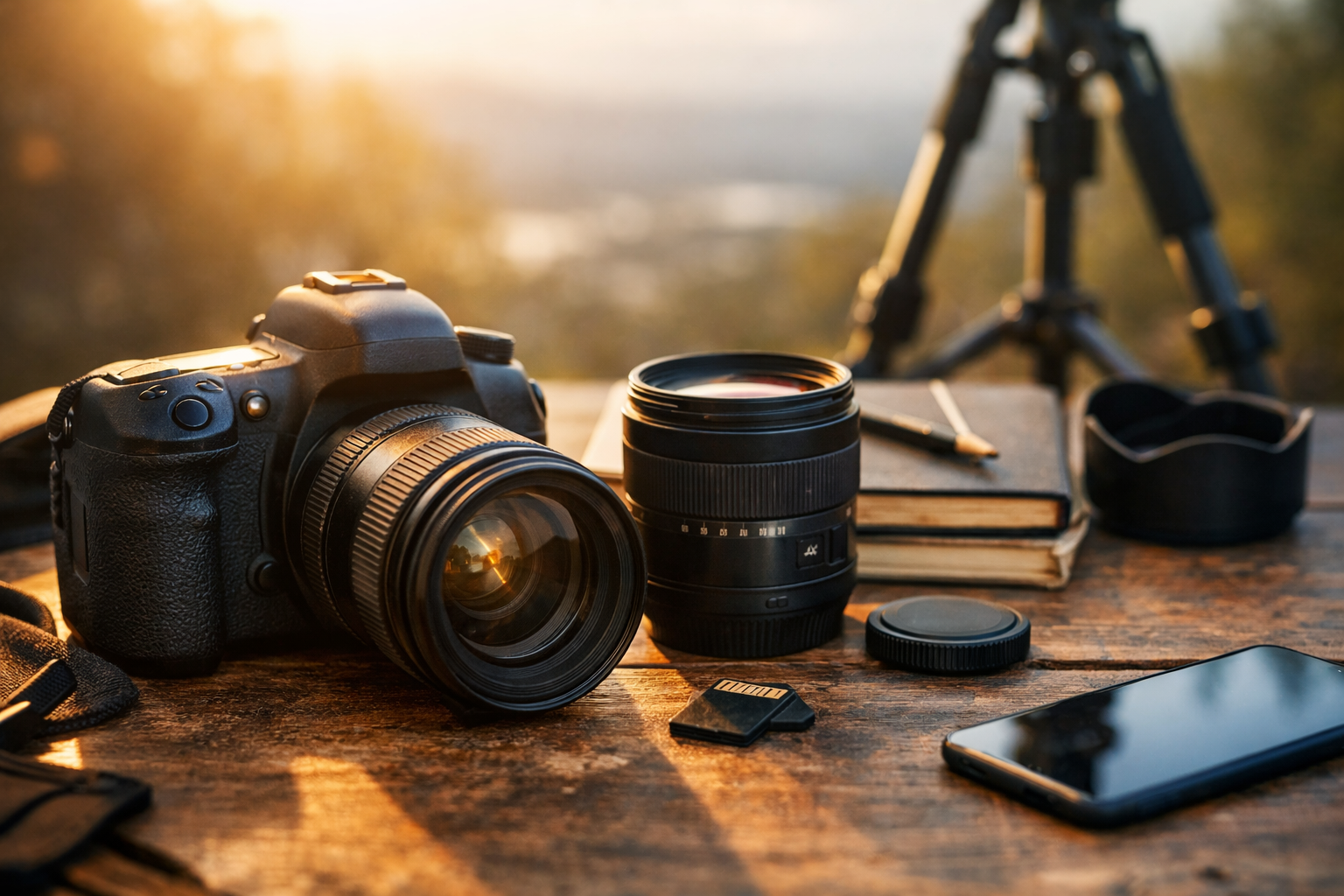
Photography can feel overwhelming when you’re just starting. Aperture, shutter speed, ISO, composition rules—there’s a lot to absorb. The good news? You don’t need expensive gear or years of experience to take noticeably better photos. With the right approach, you can see improvements immediately.
In this guide, you’ll learn beginner photography tips to improve instantly, focusing on simple techniques that make a big difference from day one. Whether you’re using a DSLR, mirrorless camera, or even a smartphone, these tips will help you shoot with more confidence and consistency.
1. Learn to See Light Before You Touch the Camera
Light is the foundation of photography. Before adjusting settings or framing a shot, pause and observe how light interacts with your subject.
What to look for:
- Direction: Is the light coming from the side, behind, or directly in front?
- Quality: Is it soft (cloudy day, window light) or harsh (midday sun)?
- Color: Warm (sunrise/sunset) or cool (shade, overcast)?
Instant improvement tip:
Turn your subject slightly until shadows add depth rather than flattening the image. Side lighting often creates more interesting photos than direct front lighting.
2. Master One Camera Mode at a Time
Many beginners jump between modes without fully understanding any of them. Instead, focus on one mode and use it intentionally.
Best modes for beginners:
- Aperture Priority (A or Av): Control background blur easily
- Shutter Priority (S or Tv): Great for motion and action
- Manual (M): Best once you understand the basics
Instant improvement tip:
Start with Aperture Priority and keep your aperture between f/2.8 and f/5.6 for portraits or f/8 and f/11 for landscapes.
3. Use the Rule of Thirds (But Don’t Obsess)
The rule of thirds helps you compose balanced, visually pleasing photos by placing key elements off-center.
How it works:
- Divide your body into nine equal pieces.
- Place your subject along the lines or intersections.
Most cameras and smartphones let you turn on a grid overlay, making this easy.
Instant improvement tip:
Position eyes (for portraits) on the top third line rather than the center of the frame.
4. Get Closer Than Feels Comfortable
One of the most common beginner mistakes is standing too far away. When your subject is small in the frame, photos feel weak and cluttered.
Instant improvement tip:
Take two steps closer—or zoom in with your feet, not your lens. Instantly filling the frame makes images more powerful.
5. Simplify the Background
A busy background can ruin an otherwise great photo. Beginners often focus on the subject and forget what’s happening behind it.
Quick ways to simplify:
- Change your shooting angle.
- Use a wider aperture (lower f-number)
- Move your subject away from the background.
Instant improvement tip:
Before pressing the shutter, scan the edges of your frame for distractions.
6. Learn Basic Focus Control
If your photo isn’t sharp where it matters, nothing else will save it.
Key focus tips:
- Use single-point autofocus instead of auto-area
- Focus on the eyes for portraits.
- Lock focus and recompose if needed.
Instant improvement tip:
Turn off automatic face switching and manually select your focus point for better accuracy.
7. Shoot in Natural Light Whenever Possible
Artificial light can be tricky for beginners. Natural light is forgiving, flattering, and easy to use.
Best natural light scenarios:
- Window light indoors
- Open shade outdoors
- Golden hour (early morning or late afternoon)
Instant improvement tip:
Place your subject near a window and turn off indoor lights to avoid color mixing.
8. Stop Deleting “Bad” Photos Too Quickly
What looks like a failed photo today may teach you something tomorrow. Reviewing your mistakes is one of the fastest ways to improve.
Ask yourself:
- Is it out of focus?
- Is the exposure off?
- Does the composition feel awkward?
Instant improvement tip:
Keep a folder of “learning photos” and revisit them weekly to spot patterns.
9. Use ISO Intentionally (Not Automatically)
High ISO introduces noise, although a slightly noisy picture is preferable to a blurry one.
Beginner ISO guidelines:
- ISO 100–200: Bright daylight
- ISO 400–800: Cloudy or indoor light
- ISO 1600+: Low light or night scenes
Instant improvement tip:
If your photos are blurry indoors, raise ISO before lowering shutter speed.
10. Shoot More—but Shoot With Purpose
Taking more photos helps, but mindless shooting doesn’t. Intentional practice is what leads to rapid improvement.
Try this exercise:
- Pick one subject
- Take 10 shots from different angles.
- Change only one setting at a time.
Instant improvement tip:
Limit yourself to one lens or one focal length for a day to improve composition skills.
11. Learn Basic Editing (Keep It Subtle)
Editing doesn’t mean “fake.” It means refining what your camera couldn’t capture perfectly.
Beginner editing essentials:
- Exposure
- Contrast
- White balance
- Cropping
Free tools like Lightroom Mobile, Snapseed, or Darktable are more than enough.
Instant improvement tip:
If you notice heavy edits, you’ve probably gone too far. Aim for natural results.
12. Study Photos You Love (Actively)
Scrolling isn’t studying. Analyze photos intentionally.
Ask:
- Where is the light coming from?
- What’s the focal point?
- Why does this image feel good?
Instant improvement tip:
Try recreating one photo you admire using whatever gear you have.
13. Be Patient—but Consistent
Photography is a skill, not a talent you’re born with. Improvement comes from repetition, reflection, and curiosity.
Instant improvement tip:
Shoot a little every day—even 10 minutes builds momentum.
Final Thoughts
You don’t need to master everything at once. These beginner photography tips to improve instantly are designed to give you quick wins while building a strong foundation for long-term growth.
Focus on light, composition, and intention. Stay curious. Make mistakes on purpose. Most importantly—keep shooting.
The improvement you’re looking for is closer than you think.