



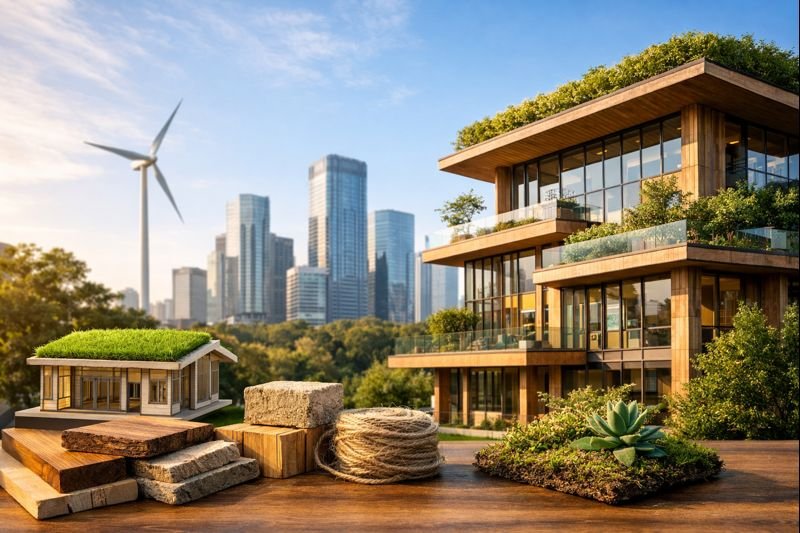
Contemporary architecture is no longer defined solely by bold aesthetics or structural innovation. Today, it is equally shaped by environmental responsibility. As climate change, resource depletion, and urban expansion continue to influence how cities grow, architects are rethinking the very materials they use. At the center of this shift lies a growing commitment to green materials—substances chosen not only for performance and beauty but also for their environmental impact.
The role of green materials in contemporary architecture goes far beyond sustainability buzzwords. These materials are actively redefining how buildings are designed, constructed, and experienced, offering practical solutions to some of the industry’s most pressing challenges.
Understanding Green Materials in Architecture
Green materials, also known as sustainable or eco-friendly materials, are those that reduce environmental damage over their lifetimes. This includes extraction, manufacturing, transportation, use, and eventual disposal or reuse. What sets them apart is not a single feature, but a combination of responsible sourcing, durability, energy efficiency, and low environmental impact.
Common characteristics of green materials include:
- Renewable or rapidly replenished sources
- Low embodied energy
- Minimal toxic emissions
- High recyclability or biodegradability
- Long lifespan with reduced maintenance needs
In contemporary architecture, these materials are no longer niche alternatives. They are becoming foundational design elements.
Why Green Materials Matter in Modern Architectural Design
A large share of the world’s energy use and carbon emissions is attributable to buildings. The materials used in construction play a major role in this footprint. Traditional materials like concrete and steel, while structurally reliable, are energy-intensive to produce. Green materials offer a way to reduce this impact without sacrificing performance.
Beyond environmental considerations, green materials also respond to evolving social expectations. Clients, governments, and occupants increasingly value healthy indoor environments, lower operating costs, and ethical construction practices. Architects are meeting these expectations by integrating sustainable materials into modern design concepts.
Key Green Materials Shaping Contemporary Architecture
1. Engineered and Reclaimed Wood
In contemporary architecture, wood has seen a rebirth. Cutting-edge engineered wood products like glulam and cross-laminated timber (CLT) store carbon rather than releasing it, while offering strength on par with steel.
Reclaimed wood adds another layer of sustainability by repurposing materials from old buildings, reducing waste, and preserving character. Its natural warmth also softens the clean lines typical of contemporary design.
2. Recycled and Low-Carbon Concrete
Concrete remains essential in architecture, but greener alternatives are reshaping its role: recycled aggregates, fly ash, and slag-based concrete significantly lower the carbon emissions associated with traditional cement production.
These innovations allow architects to retain concrete’s versatility while aligning with sustainability goals—a crucial balance in large-scale contemporary projects.
3. Bamboo and Rapidly Renewable Materials
Bamboo is among the fastest-growing building materials in the world. Its strength, flexibility, and aesthetic appeal make it ideal for flooring, wall systems, and even structural applications in modern architecture.
Other rapidly renewable materials, such as cork and hempcrete, are also gaining traction for their insulation properties and low environmental impact.
4. High-Performance Glass
Glass is a defining feature of contemporary architecture, but it has historically raised concerns about energy efficiency. Modern green glass solutions—such as low-emissivity (Low-E) coatings and double- or triple-glazing—address this issue.
These innovations allow natural light to flood interior spaces while reducing heat loss and solar gain, improving both comfort and energy performance.
5. Recycled Metals
Steel and aluminum remain vital to contemporary architecture, particularly in high-rise and industrial-style designs. Using recycled metals drastically reduces energy consumption compared to producing new materials.
Recycled steel, in particular, maintains structural integrity while supporting circular construction practices.
The Aesthetic Impact of Green Materials
One of the most compelling aspects of green materials is their seamless integration into modern design language. Contemporary architecture often emphasizes simplicity, openness, and a connection to nature—qualities that sustainable materials naturally enhance.
Exposed timber, textured recycled surfaces, and natural finishes add depth and authenticity to minimalist spaces. Rather than limiting creativity, green materials often inspire more thoughtful and expressive architectural solutions.
Green Materials and Energy Efficiency
Sustainability in architecture is not just about what a building is made of, but how it performs. Green materials play a critical role in improving energy efficiency throughout a building’s life.
Natural insulation materials such as sheep’s wool, cellulose, and cork regulate indoor temperatures more effectively than many synthetic alternatives. Combined with passive design strategies, they reduce reliance on heating and cooling systems.
This synergy between material choice and architectural design is a defining feature of contemporary sustainable buildings.
Health and Well-Being Benefits
Modern architecture increasingly prioritizes occupant well-being. Many conventional building materials emit volatile organic compounds (VOCs), which negatively affect indoor air quality. Green materials, by contrast, are often non-toxic and breathable.
Low-VOC paints, natural finishes, and responsibly sourced materials create healthier living and working environments. This human-centered benefit is one reason green materials are becoming standard in residential, commercial, and institutional projects.
Economic Value and Long-Term Performance
While green materials may sometimes have higher upfront costs, contemporary architecture takes a long-term view. Durable, energy-efficient materials reduce maintenance, operational expenses, and replacement costs over time.
Moreover, buildings constructed with sustainable materials often achieve higher property values and stronger market appeal. Certifications and green credentials further enhance their economic viability.
Challenges in Adopting Green Materials
Despite their advantages, green materials are not without challenges. Availability, regional supply constraints, and unfamiliarity can slow adoption. Some materials require specialized knowledge or construction techniques, which may increase complexity.
However, as demand grows and technology advances, these barriers continue to diminish. Education, innovation, and supportive policies are accelerating the mainstream use of sustainable materials in architecture.
The Future of Green Materials in Contemporary Architecture
The role of green materials in contemporary architecture is set to expand even further. Emerging technologies are producing bio-based materials, carbon-negative products, and smart materials that adapt to environmental conditions.
As architects move toward regenerative design—where buildings actively contribute to environmental health—materials will play an even more critical role. The future is not just about reducing harm, but about creating structures that coexist harmoniously with nature.
Conclusion
The role of green materials in contemporary architecture is both practical and transformative. These materials reduce environmental impact, enhance building performance, support human well-being, and enrich architectural expression. Far from being a trend, they represent a fundamental shift in how modern buildings are conceived and constructed.
As architecture continues to evolve, green materials will remain at the core of responsible, forward-thinking design—shaping cities that are resilient, beautiful, and sustainable for generations to come.